Beginner Guide to Running
1. Buy some specialised running shoes
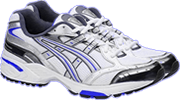 The good news is that the only piece of kit that is strictly necessary to take up jogging is proper running trainers. Of course you can buy all sorts of running kit which can make running more comfortable and stylish!, but all you really need to start with is a proper pair of trainers and comfortable shorts/leggings and top/t-shirt (weather dependent) and an exercise bra (gender dependent!). Specialised shoes will have the correct amount of cushioning to protect you – they don’t have to be the most expensive – but we recommend you go to a specialist running shop where they can analyse your running style and help you find the correct shoes. Many new runners can experience shin splints and knee pain because of the lack of proper cushioning. Running on softer surfaces will also help to avoid injury – so try to find off-road routes whenever possible – look at our database of Running Routes for inspiration. The good news is that the only piece of kit that is strictly necessary to take up jogging is proper running trainers. Of course you can buy all sorts of running kit which can make running more comfortable and stylish!, but all you really need to start with is a proper pair of trainers and comfortable shorts/leggings and top/t-shirt (weather dependent) and an exercise bra (gender dependent!). Specialised shoes will have the correct amount of cushioning to protect you – they don’t have to be the most expensive – but we recommend you go to a specialist running shop where they can analyse your running style and help you find the correct shoes. Many new runners can experience shin splints and knee pain because of the lack of proper cushioning. Running on softer surfaces will also help to avoid injury – so try to find off-road routes whenever possible – look at our database of Running Routes for inspiration.
You can read more detailed advice on this subject in our separate article on Running Shoes.
2. Plan a training schedule and STICK TO IT
 We suggest you start off with a plan to run/walk for 20 to 30 minutes for 3 to 5 days a week. We have produced a Beginner's 5K Training Plan as a good example, but you can adapt this if you are finding it too easy or too hard. But keep to the same number of days if at all possible and try to spread the days out so you do not do more than 2 days in a row - you can use our Training Planner to help with this. Pick times to suit your lifestyle – e.g. if you're a morning person, then run early, but we recommend running before you settle down for the evening or you may not want to go out again!. Also, don’t run within 3 hours of a heavy meal or you may find it very uncomfortable. Agree your schedule in advance with anybody who needs to know e.g. your partner for childcare so that they will be supportive when the time comes. We suggest you start off with a plan to run/walk for 20 to 30 minutes for 3 to 5 days a week. We have produced a Beginner's 5K Training Plan as a good example, but you can adapt this if you are finding it too easy or too hard. But keep to the same number of days if at all possible and try to spread the days out so you do not do more than 2 days in a row - you can use our Training Planner to help with this. Pick times to suit your lifestyle – e.g. if you're a morning person, then run early, but we recommend running before you settle down for the evening or you may not want to go out again!. Also, don’t run within 3 hours of a heavy meal or you may find it very uncomfortable. Agree your schedule in advance with anybody who needs to know e.g. your partner for childcare so that they will be supportive when the time comes.
3. Go out and follow your training schedule
 It's not going to be easy at first – you will feel out of breath and you will probably arrive back exhausted and all red in the face – but every week you should notice an improvement. Find a route to start with in a place you know well (from your own doorstep is ideal for post run recovery! ) but if you feel self-conscious then find somewhere less noticeable for your first attempts! Also, remember not to run too often on hard pavements or roads or you may get injured. We suggest you do a run/walk pattern at first – say 4 minutes running, then 2 minutes walking, then 4 minutes running – adjust this to suit your own fitness level. Then gradually you will be able to cut out the walking and you will be able to work on distance and then speed. It's not going to be easy at first – you will feel out of breath and you will probably arrive back exhausted and all red in the face – but every week you should notice an improvement. Find a route to start with in a place you know well (from your own doorstep is ideal for post run recovery! ) but if you feel self-conscious then find somewhere less noticeable for your first attempts! Also, remember not to run too often on hard pavements or roads or you may get injured. We suggest you do a run/walk pattern at first – say 4 minutes running, then 2 minutes walking, then 4 minutes running – adjust this to suit your own fitness level. Then gradually you will be able to cut out the walking and you will be able to work on distance and then speed.
4. Record your runs in a Training Log Book
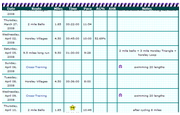 This is very important – recording your times and/or distances will enable you to see your progress. Without this, your motivation may soon waiver. Good Run Guide Membership provides you with an interactive Log Book where you can record all your runs and gives breakdowns on progress, including flagging up PB's (personal bests). You can measure your runs with GPS devices (we have an automatic synch with Garmin), via our own GPS App or using our online Route Measurer to accurately measure how far you've run. If you are taking up running to lose weight remember that muscle weighs more than fat, so your weight may actually increase for a while as you put on more muscle. You can measure yourself periodically with a tape measure or use scales with a fat measurer – so you can concentrate on reduction in fat rather than weight. You can track your weight loss and your progress towards your target weight using our Weight Tracker. This is very important – recording your times and/or distances will enable you to see your progress. Without this, your motivation may soon waiver. Good Run Guide Membership provides you with an interactive Log Book where you can record all your runs and gives breakdowns on progress, including flagging up PB's (personal bests). You can measure your runs with GPS devices (we have an automatic synch with Garmin), via our own GPS App or using our online Route Measurer to accurately measure how far you've run. If you are taking up running to lose weight remember that muscle weighs more than fat, so your weight may actually increase for a while as you put on more muscle. You can measure yourself periodically with a tape measure or use scales with a fat measurer – so you can concentrate on reduction in fat rather than weight. You can track your weight loss and your progress towards your target weight using our Weight Tracker.
When you have reached your first goal e.g. running one mile/km without stopping, then make another, such as running 2 miles or increasing your speed over a set distance. There is always another goal in running, which is why many of us find it so addictive!. When you can run a mile or two comfortably then enter a fun run a few months away and make this your next goal. The next step could be a 10K, then a half marathon, even a marathon when you are ready, but take it in increments or you will very easily become injured.
5. Join a Running Club and/or find a parkrun near you
 Joining your local running club is an ideal motivator and you will generally find all standards and abilities within most clubs and a lot of friendly advice and make new friends along the way. Also, if you have trouble fitting in your running early and don’t want to run in the dark on your own (not advised) then you can join in on the club’s training night and be completely safe. You can use our Club Finder to search for a Running Club near you. Another great organisation is parkrun, who organise free Saturday morning timed runs in many parks throughout the UK Joining your local running club is an ideal motivator and you will generally find all standards and abilities within most clubs and a lot of friendly advice and make new friends along the way. Also, if you have trouble fitting in your running early and don’t want to run in the dark on your own (not advised) then you can join in on the club’s training night and be completely safe. You can use our Club Finder to search for a Running Club near you. Another great organisation is parkrun, who organise free Saturday morning timed runs in many parks throughout the UK
|


 Good Run Guide - The UK's Leading Independent Running Website

